
Situational nightmares vs. replicative trauma nightmares

I’ve written many blog postings about nightmares over the years (see a listing at the end of this article) and dedicated sections on both my website and a section in the book, Morpheus Speaks: The Encyclopedia of Dream Interpreting.

But I want to draw a distinction between nightmares that are born of the need for our health and well-being and those that are reenactments of trauma e.g., the kind many people identified as suffering from PTSD. How you treat them is significantly different.

Nightmares come from the unconscious psyche trying to gain your conscious attention usually because there are events and stressors going on around you or at a subconscious level that you are not paying attention to but can affect you negatively if you don’t act on them. Frequently this kind of nightmare will show up repeatedly until you finally act or until the danger has passed. This type of nightmare can often, though not always, be adequately dealt with by going back into the nightmare while not fully awake or enlivening them after one has awakened, gleaning their meaning and hidden message(s) and or changing the narrative and bringing them to a more satisfactory conclusion. This can be done either on one’s own by looking for the positive in the dream or looking for the environmental triggers that may bring them about. Often this can be done with a friend or even in a dream group.

Being continuously bathed in negative images from TV shows and the news media can often be triggers for recurring nightmares. Limiting one’s exposure to these triggers can prove cathartic and helpful in lessoning or eradicating most recurring nightmare sequences or reduce the number of nightmares over time.

However, those who have suffered extreme trauma e.g., having been physically attacked, raped, intimate partner violence, repeated psychological or physical abuse, experience of extreme events of death, near death, or causing the death of another, or extreme uncontrollable and recurring chaos can sometimes relive these traumas over and over again ad infinitum and require medical and therapeutic help to deal with reoccurring and unrelenting nightmares. These relived or replicative moments of trauma through almost nightly nightmare dreams are symptomatic of those suffering from Post-Traumatic Stress and require professional help in dealing with them. To continually relive them can become physically and psycho-emotionally debilitating and fall into the category of a disorder.

Website:

http://thedreamingwizard.com/nightmares_304.html

Blog postings:
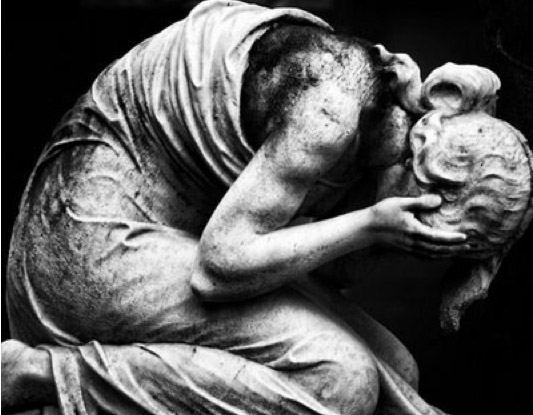
Dealing with the emotional and psychological after-effects of violence

grief.jpg

On occasion I receive dreams from those who have had family members or boyfriends/girlfriends that have been murdered. Many share seeing them again in their dreams. In some cases the departed will morph into something else. In one case the visiting dead turned into a snake that when in an attempt to catch it the snake slithered away into a hole. In this case it may have been a metaphor for those who had perpetrated the murder having not been caught and the dreamer trying to deal with the betrayal of both the “perp” and the authorities.

Some dreamers experience great helplessness (feeling tied up or trapped) or overwhelm (tsunami waves and/or flooding) as part of the dream. Some escape the symbolic trauma by climbing stairs or mountains toward a higher perspective while others fly free across a meadow or run away from threatening people or monsters.

Others have wondered if the extreme grief they’ve suffered has in someway damaged the soul.

Mostly the dream material of such traumas is about the mind trying to make sense of the loss and to then deal with it i.e. to make peace with it.

I believe that our souls accept trauma long before our conscious minds are able to wrap themselves around it, though the pain can be experienced as being so deep and profound that it feels as though your very essence, your being, the soul of yourself has been irreparably damaged.

Though the mind is valiantly trying to grasp and deal with the trauma experienced by the violent death of a loved one it can rarely do this alone. What often happens is the mind enters a never-ending spiral with no escape or resolution. Some dreamers experience this never-ending spiral as a vortex in a storm-tossed sea with them or the ship they’re on being pulled down into the darkness below. Some see themselves at the edge of a bottomless abyss.

Such dreams may reflect the dreamer’s difficulty in trying to resolve a great inner conflict generated by loss. This can take the form of anxieties of losing themselves or in facing the hard emotional reality of their own death. These dreams are part of the healing process but sometimes one can get stuck in the process without moving to the next level of dealing with the grief.

The experience of losing someone through a violent death can be similar to the experience of someone with post-traumatic stress (PTSD) with the reliving of the event in dreams or flashbacks, repetitive nightmares, and anxiety symptoms. This can also happen with those who have been physically attacked, witnessed great violence, and/or have been raped. All of these experiences destroy the sense of safety and personal integrity of ones life. They are a violation of the soul.

If these dreams persist over time it might be useful to the dreamer to seek a helper, a guide in the healing process, someone trained in helping others deal with grief.

Organizations such as Goodtherapy.com * can sometimes be useful.

Learning to deal with ones grief in a productive way can be helpful as well and to that end this link to ActiveBeat * as well as the following article in Psychology Today: Grief-isnt-something-get-over* might also be useful.

___________________________________________________

* I am not an advocate of these sites and only offer them as examples of resources without endorsing them. You will have to determine whether or not they are useful to you.