Who am I being or expressing?

Over the last 40 years I have taken the MBTI personality inventory three times (with at least 10 years between them) as a means of ascertaining any life experience effects. Generally, the results have been relatively consistent with some small regression within the expected variation. Having recently celebrated my 80th year I’ve found myself reflecting a little more than usual on my life to this point and what internal points of view have motivated my movements through my life up to now. As I reflect on these internal factors and how they have played out across the years I’ve been most interested in how accurate the MBTI has been in my own journey. Personally, I have always viewed the traits revealed in this personality inventory as a means of defining how the soul is being expressed into my life.

So, what is this MBTI of which I’m writing?

As per the Google search for the MBTI (Myers Briggs Type Indicator):

The MBTI is based on Carl Jung’s theory of psychological types, which was then developed into the assessment by Katharine Cook Briggs and Isabel Briggs Myers in the 1940s. The test is designed to make Jung’s complex ideas more accessible by assessing a person’s preferences across four dichotomous domains: Extraversion/Introversion (energy), Sensing/Intuition (information intake), Thinking/Feeling (decision-making), and Judging/Perceiving (lifestyle). These preferences combine to form one of 16 possible personality types. Jung proposed that people experience the world through four principal functions: sensation, intuition, feeling, and thinking. 

Jung also believed that people have dominant ways of using these functions and that variations in behavior are due to differing preferences. Since the advent of this personality indicator there have been extensive studies that show good reliability in some areas to limited support in others.

In a reading of studies that have looked at my personal personality result (ENFP/INFP) most of the interpretations seem to support my own self-reported experiences (this of course may be biased). The difference between my E (extravert energy) versus my I (introvert energy) scores suggest no dominance in this area (known as an Ambivert) and indicates high adaptability. This rings pretty true for me in that I’m willing to lead if needed or called upon and have been told that I do a relatively good job at it but prefer to remain in a supportive mode and a solitary mode. The context of a situation often dictates what personality is expressed.

Typically, people who fall into this category find themselves highly intuitive (N), feeling oriented (F) and approaching life with flexibility, spontaneity, and openness to new information and opportunities (P perceiving).

We also tend to be highly critical of ourselves and feel as though we don’t belong (a feeling versus a fact), finding it difficult to explain our inner self to others. 

If you’re interested, you can find access to the MBTI at the following link:

 https://www.16personalities.com/personality-types

“It’s not about you, Dad!”

After some time, when first hearing this from my daughter (see July 27th posting), it’s come to me that as an individuated soul, she’s right; it’s not about me; it’s about the soul. What I identify as me is just the vehicle. The ego-self (me) adds personalization where there may be none. Most of my upsets aren’t really about me, either. They belong to others trying to navigate their own lives. It’s about their ego interpretations and the daily events that they experience. 

This reflexive need to occasionally interpret the actions of others as being about me can get a bit old, and sometimes, it can get in the way of compassionately responding to others’ experiences and how they are dealing with them.

All too often, I create my waking dream experience in a nightmarish way when there’s little that relates to me directly. Unresolved experiences of earlier similar events in my life still get triggered as though they are current and have little to do with what’s going on with the other person I am relating to at the moment.

As with a sleeping dream, when I can step back to gain another perspective on the events in my waking dream, I can better interpret their meaning and deal with them more appropriately.

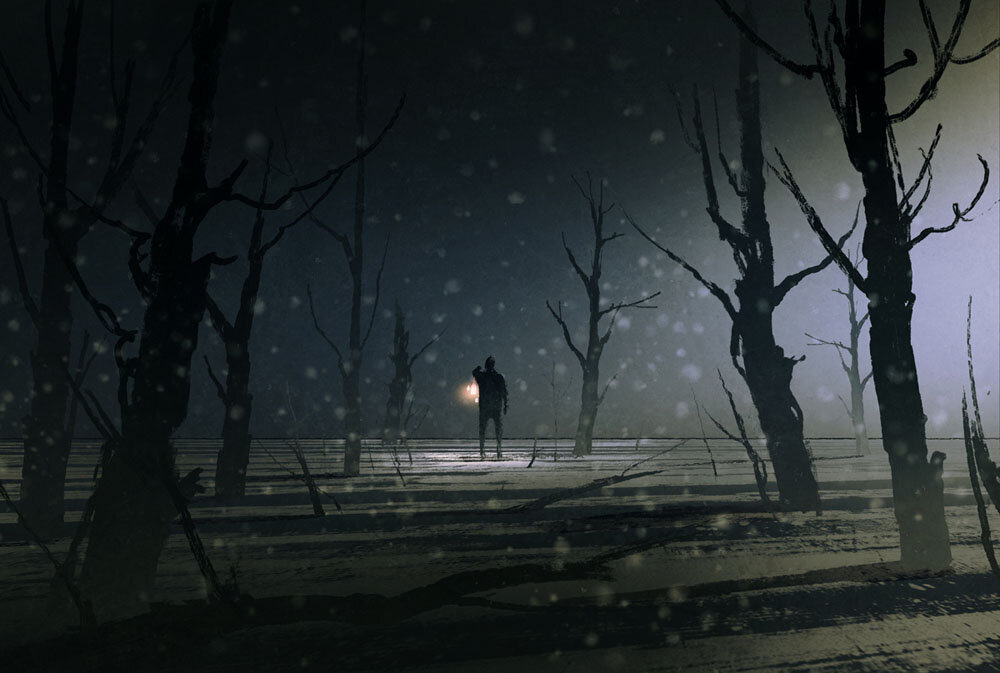
Want to know what the Dark Knight looks like?

It was a dreary, overcast morning when I entered the local coffee shop down the street. It was Saturday, so the usual bustle of people going in and out of the shop was reduced to almost nothing. This was the end of a long and painful walk I had taken that morning, having gotten up before the sun to take advantage of the early morning coolness.

“How are you doing today?” the barista asked as I ordered my coffee. 

My mind was just finishing up with a poor-me-diatribe born of a bruised ego conversation I’d had with one of my daughters earlier in the week. What I wanted to say was…

“As my daughter keeps saying, any time there’s an upset, “This isn’t about you, Dad!” Never mind that I have feelings and thoughts; they’re irrelevant to what’s going on. But she’s probably right. I don’t feel very relevant these days, and wonder if I never was, but my ego was too busy to notice. 

Another side to my irrelevant self says, “So what?” Who’s to care if it’s not about me?

I want to think I’ve lived my life with at least giving and taking in equal measure, if not a little more to the giving side. Still, I’m not the determiner of that because the ego nearly always tries to weigh its experience toward the self-interest positive end of the spectrum. 

Others in the family will write the story of my life that will be handed down, and from what I hear, I’ve failed miserably to live up to their expectations. It also seems a universal opinion that I failed and made it too much about me. But so what? I can’t change it now; soon, my ego will be dead, and how relevant I was won’t make any difference; the damage was done. I’m also not sure that the soul cares one way or the other, either. 

It’s starting to feel like I’ve wasted my once-only time here. But again, that’s the ego talking, and the soul doesn’t care; the ego did its job by giving the soul a vehicle for entering the world.”

But all I said was, “Fine, just fine. How’s yours been going?” And then I thanked him for my coffee and said, “Have a good one!” as my ‘irrelevant self’ walked out the door. It was no use wasting a perfectly good ‘poor me’ and spreading my “down-eristic” self on an innocent barista. 

I have had these Dark Night experiences many times throughout my life. For many years, I used to run from them, which only got me mired and stuck, but now I periodically embrace them as a means of transcending them and moving through into the light.

“How’s your day going so far?”

Fear in dreams

In the last two postings of the Book of Dreams Blog*, I’ve examined fear and anger in dreams and in our waking lives. Today’s Dark Knight of the Soul post extends these themes.

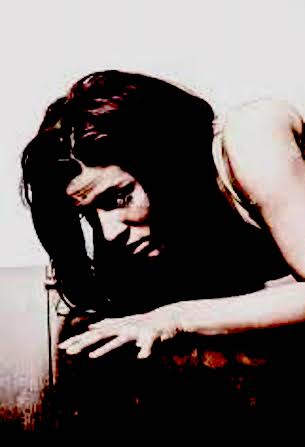
The dream (a mild nightmare): A woman is crawling on the ground in obvious distress. In the dream, several different females are in distress.

Interpretation: is this an attack on the soul? Soul stress? On the individuated soul/anima Mundi?

There is a general dysphoria that has gripped the societies of the world. Though this nightmare-like dream may be idiopathic, i.e., not caused by a specific trauma, it may reflect a more global and profound trauma being experienced daily. We are awash in fear-generated news almost 24/7, placing us in nearly constant fight/flight/freeze mode. This affects society’s cohesion, creating an atmosphere of everyone for themselves type of action. Not realizing this fear is internal, we seek ways to mitigate the feelings by attaching ourselves to like-minded people and blaming others outside ourselves and the group we’ve attached to. 

Not knowing where these feelings of fear come from, we conjure wild conspiracy scenarios to create an object of our fears that we can then attack or defend against. But it is us who are the enemy. Wherever we run, wherever we turn, there we are. We flail at ghosts and that which is not us. We try to mitigate what threatens us but always miss the actual perpetrator. Meanwhile, the soul is hung out to dry with its purpose and value-driven existence, drowning in fear and draining its energy as it thrashes about.

*see https://thebookofdreamsblog.wordpress.com/2024/07/21/fear-and-anger-two-sides-of-the-manipulation-coin/

And

“Throw a line into the darkness”

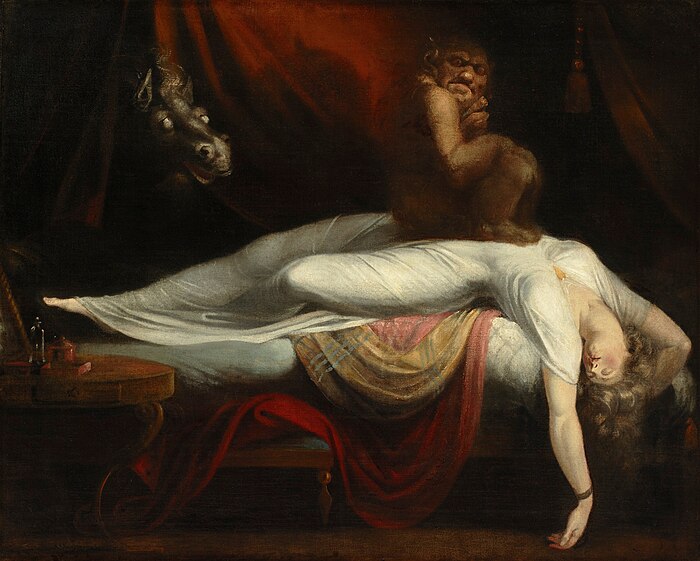
The Nightmare by-Henry Fuseli

The other day while watching a rather intriguing detective series on PBS titled Anika I became aware of the background music and its rather haunting lyrics. The theme song “Bringing Murder to the Land” by Newcome and Allison spoke to me in another way than perhaps it was intended as a theme song for a murder drama.

“Throw a line into the darkness

Oh, we are shadows, blaze inside

This light will shine unbroken tonight

Shine inside

And this light, it can blind us

Torch the shadows for all time

And you can color in my dark nights

Paint your promise over me

This light will shine unbroken tonight

Shine inside

Shine tonight

Shine tonight

Shine tonight

Burn

Burn

Burn

Burn

Burn”

The first line, “Throw a line into the darkness,” reminds me of what the mind is doing through a nightmare. It’s also reminiscent of “fishing,” a metaphor for bringing up something from the spiritual and the deep so that one can deal with it in the light. While trying to bring this darkness into the light of consciousness, “Oh, we are shadows, blaze inside. This light will shine unbroken tonight; shine inside. And this light, it can blind us, torch the shadows for all time” these lines suggest to me that we can be overwhelmed and blinded by the darkness of our shadow self as it grows in brightness, entering our awareness. Bringing the dark into the light can add color to our darker natures, and by looking more closely at the nightmare, it can hold much promise for bringing light into our future nights and “burn” away our fears.

Perhaps it was the mysterious and haunting way the music was sung and the slight reverb in its presentation that wormed its way into my soul, or maybe it was the cryptic lyrics. Still, it struck me as the perfect theme for the nightmare dreaming and interpreting genre.

Murder in a dream can conjure the need for change or the effects change can have on one’s status quo. It can also be about ending some vexing issues, habits, or behavior.

Bright lights can symbolize spiritual awakening from the darkness of the ego coming through the hidden aspects of the unconscious, which can be quite shocking at first when one sees a different reality than the one they have been living.

The ‘’burn, burn, burn…” in a dream can be about something that you can’t just ignore. This may be true of any occasional nightmare. If one is human, There is repressed material in the unconscious mind that can affect everything done in the conscious world. Nightmares bring light to that hidden material, especially when it causes problems that must be addressed.

Morpheus Speaks: The Encyclopedia of Dream Interpreting

Over 5000 dream descriptors with everyday dream images and image interpretations of the Zodiac and Tarot that show up in dreams. The book also includes a section on nightmares and current research and treatment for excessive nightmare dreams.

Learn the possible meanings of snakes, witches, and death in your dreams, kittens, wise old men/women, or angels. What might it mean if you’re being chased or shot at, drowning or trying to find a bathroom, or just standing out in the open naked?

There’s also a section on how to remember your dreams.

See the ordering picture link on the right-side column.

More on the Dark Night of the Soul

There are many ancient myths of those who entered the underworld to save a loved one e.g.  The Sumerian myth of Queen Inanna-Ishtar who went to save her sister, the Greek myth of Orpheus and Eurydice who wanted to bring back his wife from the realm of the dead, and Adonis who was sent to Hades by his mother who then recanted and had to make a deal with Persephone of the underworld to retrieve him.

These myths are examples of the dark night-of-the-soul activity that is archetypal of all humans where we descend into the darkest parts of the psyche to retrieve disowned or lost parts of oneself. In a way, this descent into the darkness and process of resurfacing is represented in the death and resurrection of Jesus that Christians celebrate during Easter named after the Proto-Germanic Spring Goddess Eostre who brought the world out of the cold death that is winter.

One’s nightmares also serve this function: they come from the dark unconscious mind seeking the light of consciousness. 

The dark night of the soul refers to a painful period in one’s life, a sinking into the darkness i.e., depression. Depression can often bring nightmares to one’s dreams. However, as with most dreams, they come in the service of one’s health and well-being. When one takes on or confronts one’s nightmare there can be resolution and healing which is why I use the play on the words ‘Knight’ instead of ‘night’ in the title of this blog.

The process of individuation that Carl Jung saw as the process of self-realization and discovery of life’s purpose on the way to knowing and living who we really are is often forged during these dark-night ventures in both our waking and sleeping lives. Though I don’t usually experience nightmares, when I do I try to engage rather than flee from them to get an idea of what they are trying to bring to consciousness so that I can deal with the issue(s).

Occasional Nightmares can offer renewal or even the ‘rebirth’ of your core self and sometimes a spiritual rebirth through introspection and reflection. Note that one’s descent into this darkness can be quite scary and should not be taken lightly especially if one is experiencing frequent nightmares. If having two or three or more nightmares per week over many weeks one might seek professional help to assess meaning and develop a healing strategy.

A Nightmare: Dream Paralysis

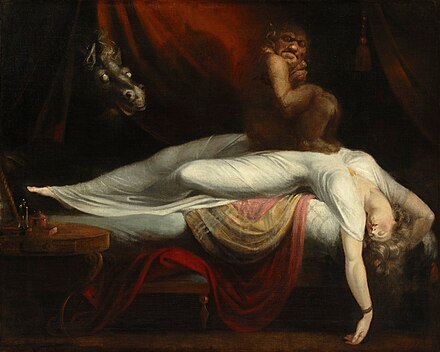
The Nightmare by Henry Fuseli

I had a nightmare last night where I experienced a human skull biting my foot and though I tried shaking it off violently it would not let go. As I tried to wake up I found myself barely able to breathe and paralyzed.

Sleep paralysis, though scary, isn’t abnormal in that the body motor system tends to shut down as you enter REM sleep and as you come out of it. REM or rapid eye movement sleep is the primary dream stage of sleep though one can have dreams during the other four stages of sleep as well but often not as vivid. This stage occurs roughly every 90 minutes or so after entering the first stage. The body shuts down the motor functions as a form of protection so that you won’t hurt yourself while thrashing around in your dream. 

Though normal, if you awake during this stage the paralysis can be quite disconcerting and may be, if experienced too often, a sign of some sleep problem or neurological issue.

As with any aspect of a dream, paralysis can suggest a feeling of being out of control, signify coping issues, a resistance to change, or a feeling of being trapped in some situation in your waking life.

Being bitten may have something to do with feeling vulnerable to someone or some situation that you haven’t dealt with adequately. For me the whole dream sequence may represent what I’ve been feeling regarding all the hate, lies and cheating going on in my country today as well as the out of control feeling associated with all the gun violence in my country and the wars being fought in various parts of the globe. I no longer have a sense of safety and belonging in my own country due to the hate and disruption coming from the extreme right wing of the social-political-religious spectrum. This stress and anxiety show up in my dreams as a nightmare from time to time.

Though the biting of my foot can be about an attack on my ability to stand firm on my own two feet and even refer to my own penchant toward self-criticism it may also have been an artifact of some neuropathy I’ve been experiencing lately and need to see a doctor about.

The truth is that a dream can reflect several different layers of meaning simultaneously. Our job is to analyze and parse the meanings out.

_____

*Meanings and information on sleep paralysis and REM sleep comes from Morpheus Speaks: The Encyclopedia of dream interpreting.

Animals in Dreams: The dark and light sides of the Wolf

          The Wolf Moon

At 10:54 PST on the 25th of January the full moon, known as the Wolf Moon by the ancients because the wolves would howl at it during this time, filled our skies with its eerie glow.

Animals in dreams generally speak to ones drives and feelings about events and people when the usual social controls are lifted. Frequently they reflect one’s attitudes about them i.e., whether one loves or fears them. Animals can also reflect our soul and its condition.

The wolf has been a mysterious and savage beast of the forest showing up in fairy tales, cult mythology, and dark legends. Men have been turned into werewolves transformed with every full moon. Legends go all the way back to the story of Gilgamesh in 1800 BCE where a woman turns her cheating lover into a werewolf.

Werewolves can also suggest the need for or announce the oncoming of a transformation in one’s life or that one’s personality is cycling between affable and prickly.

In Greek mythology the Wolf-God was Apollo and to the Romans the wolf was sacred to Mars, the god of war. It was during these ancient times that gods and monsters roamed the earth. One of the most fearsome of the wolf monster tales was the Norse myth of Fenrir who was so powerful that he threatened all the earth and had to be bound up by the gods.

As a power symbol they can reflect one’s own power and the need to use it or use it less.

Wolves also show up in our dreams and not just as nightmares, though they can speak to our darker natures. The wolf can represent our wildness and represent freedom and independence. They can represent loyalty and be guardians and even spirit animals i.e., a messenger, guide, or teacher that comes to us in times of need. To the Native American Zuni of the Southwest the wolf is a pathfinder and trailblazer. 

The image of a wolf in a dream can also suggest the need to work together as a team. As a teacher animal in a dream look to see what it is doing. Is there a lesson to be learned or some lesson that needs to be taught? As teachers they can open one to their inner nature and intuitive sense. They can be messengers of one’s need to pay attention to this intuitive sense and be more conscious of one’s environment and what’s going on around them. 

Though wolves are pack animals and thus represent family they can also be loners as in a “lone wolf” or reflect the need to be more social or inclusive of others.

When interpreting, consider phrases like “The wolf at your door” (financial issues); Cry wolf (A false alarm, making up stories for attention); keep the wolves at bay (Fight against trouble or someone attacking you); Wolf whistle (rude and unwanted attention); Big bad wolf (evil/trying to eat the good or create havoc). 

________________

*Dream meanings come from the book Morpheus Speaks: The Encyclopedia of Dream Interpreting

Is this all there is?

My nightmarish dreams of late seem to be ones of struggle, fear, turbulence, upheaval, escape, and are full of disappointment and limited solution and purposelessness. What’s the point of life I’ve wondered?

Over the years I’ve had these mind-blowing epiphanies, seemingly profound insights, spot on intuitions, dreams of the divine, imaginative stories, and magical moments. I’ve suffered, experienced joy, been hurt, soared with success, and fallen into the dark abyss of failure and loss. I’ve lived my life to the fullest I knew how. So what?

And try as I will, I can’t answer the ‘so what’ question. I guess I expected something to happen that never did, that there would be a profound understanding at the end. But nothing? I didn’t see that coming. Paul of the bible walks down a road and has an epiphany that not only changes the direction of his life but creates a whole new religion. I have an epiphany, several actually, and nothing, ho hum, just another day at the office.

What the hell!

I have what by accepted definition are profound life altering mystical experiences and what do I get? Nothing, nada, nichts. Everything’s the same as always only I no longer see the world in quite the same way, but the joy effect eventually wears off even if the change in perspective doesn’t. The only difference is I now don’t seem to fit in anywhere. And my so-called mystical experiences amount to what? I can’t even claim to be a mystic. Again, so what?

Here I am at the end of it all and all I’ve got is a big so what. I remember a Peggy Lee song where she sang, “Is that all there is?” wherein she exclaims, “Then let’s keep dancing.” Like for Peggy, I find myself disappointed but it’s a disappointment only because I thought there was some secret purpose to it all, but it seems that the dance of life has only one purpose and its not enlightenment, or to gain deep knowledge of the mysteries of the universe. The purpose may just be to dance, and to experience it as I go for no other reason than to dance. Maybe this is all God wants me to do. Who knows why? But I spoil it when I try to make it something else. 

So, what am I learning through these musings? Well, could it be to sing while I’m singing, cry when I’m crying, and dance when I’m dancing? Can it really be that simple?

Maybe we’re all just God having an experience that can only happen through a body and every experience acknowledged or not is what God wants from us and what it wants from itself. In this way how can I/we disappoint? How can any of it be disappointing? 

Once again, it seems that it’s the ego-self that likes to overthink things and create a ground of being for disappointment, but even that too may be part of the purpose for our being. Hell, we/I can’t lose!

It appears that the ‘what’s so’ of my life is also the ‘so what’ and together they make up the whole of life.

Then let’s keep dancing.